
S&UP
continuation of an "old saw"

Yeah, I know, who wants to read about tools right?
If you think tools are boring, check this out…
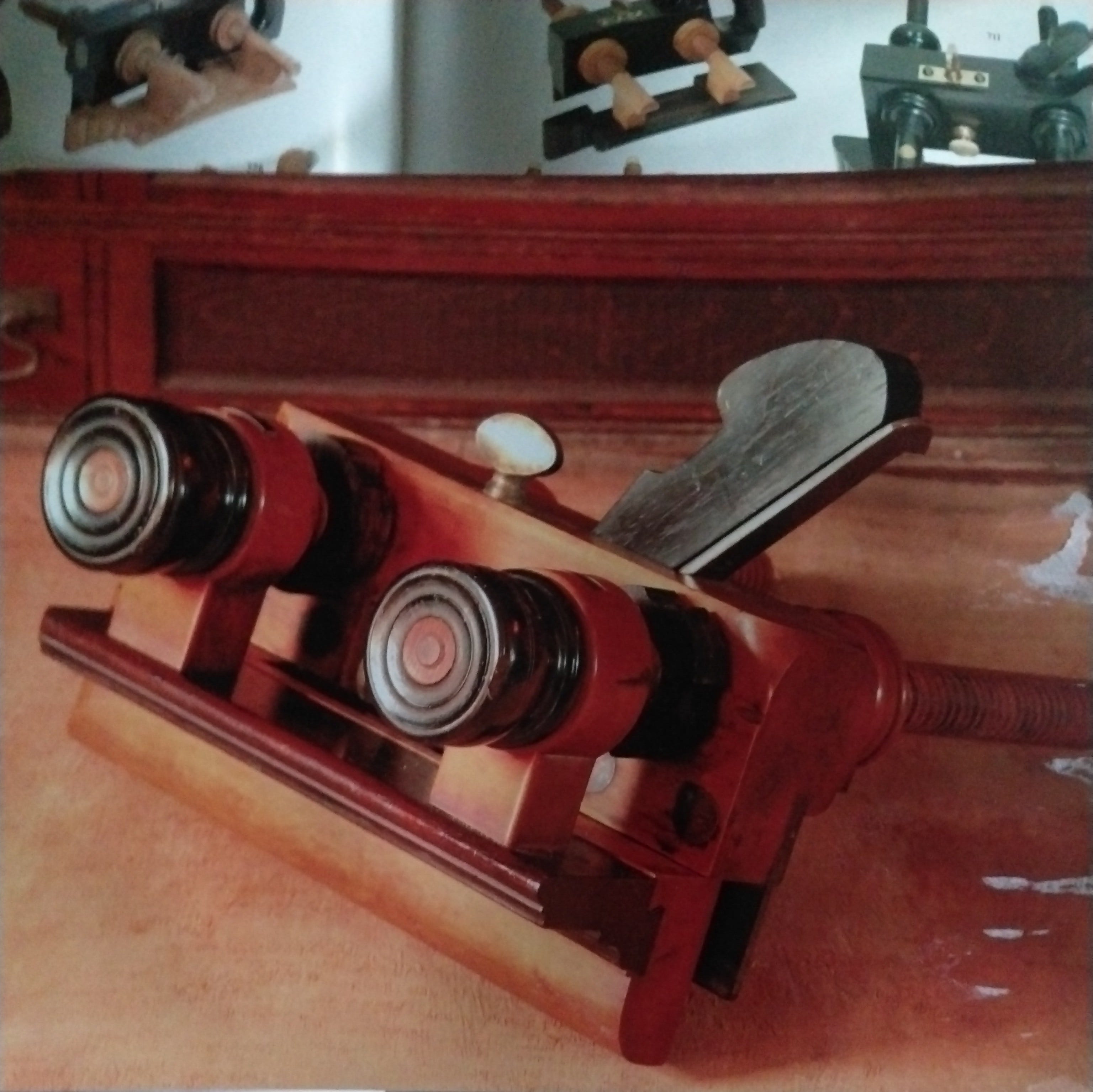
The history of that particular plow plane is still being told.
Back to the “old saw”
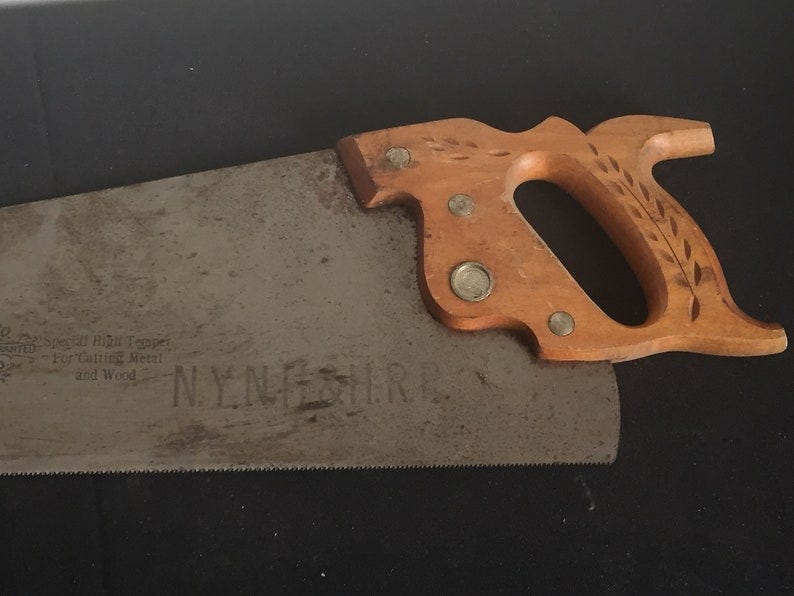
There’s a back to every saw but not every saw has a back, there’s a sawback, a backsaw, hacksaw, bucksaw, ripsaw, scroll saw and an “old saw”; which is an oft repeated yarn of sorts. A well jointed saw is a pleasure while a saw “out of joint” is an agony. Fleam, rake and set are the holy trinity of saw works. Henry Disston was the first steel baron in America, made saws for the world, laid the groundwork for the first expedition to summit Mount McKinley, a third of The Henry Disston Saw Works employees were women whose sole occupation was fitting and finishing the handles onto saws; a language all its own; notice the wheat carving and the carver’s hand in the top image, which isn’t a Disston.
It’s taken me longer to learn how to properly tune a crosscut saw than the highest levels of optical fiber and photonics technology; the old ways are lost with the generation following WWII, and the old one’s shared no secrets. Me and an old saw we go way back.
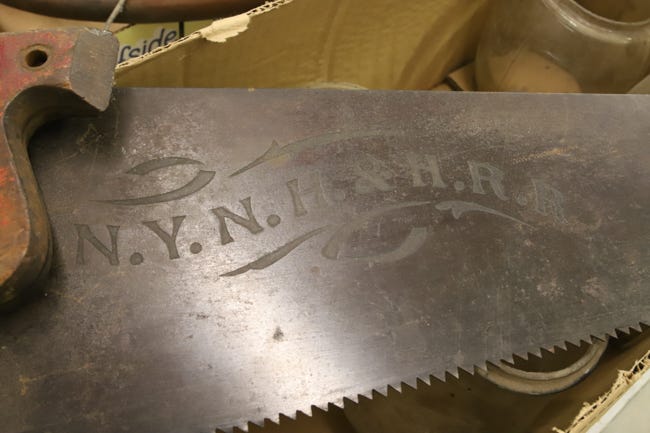
Now the two saws pictured are both making their way through the postal system as this is being written, the saw in the second image is the alleged commemorative saw in the previous post. The saw in the top image is one found during my research of the commemorative saw, which includes scouring the web and thousands of images, historical societies and even design sites looking for clues. My contacts include the National Railroad Historical Society (NRHS) and the auction house the commemorative came from. Neither of those yielded any other example other than the saw pictured at top, which all of our searches led to. That saw is now also mine.
All told, this is an instance where no news is good news; rarity is desirable so the greater the failure rate in finding like examples, the better. I now have a New York New Haven & Hartford R.R. commemorative rip saw alongside a saw made for that railroad’s workman, a commemorative and an everyday man’s saw. With a little history the story comes together. Way cool!
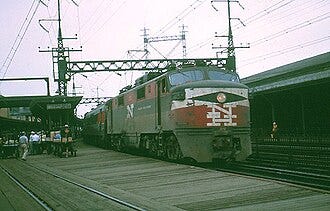
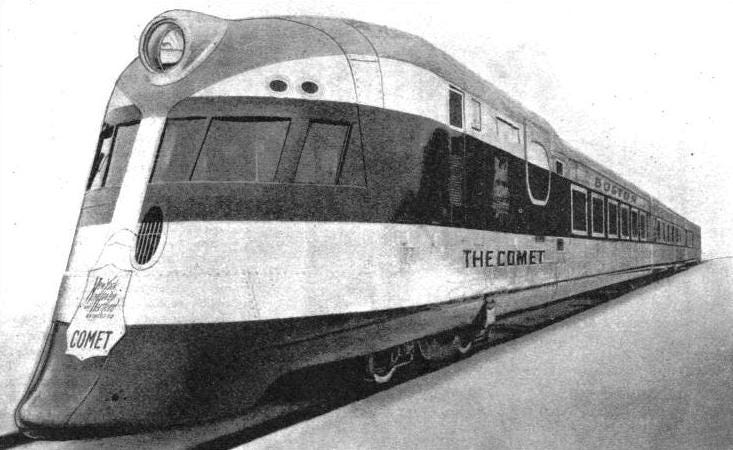
110½ MILES AN HOUR was achieved by the “Comet” on its test run. This streamlined express was built for the New York, New Haven and Hartford Railroad by the Goodyear-Zeppelin Corporation at a cost of £50,000, and the design was submitted to various aeronautical tests. The train was constructed for service between Boston and Providence, Rhode Island, and scheduled to cover the 43.8 miles in 44 minutes.
Paul has some old tools. A few old saws.