
S&UP
hunting the origins

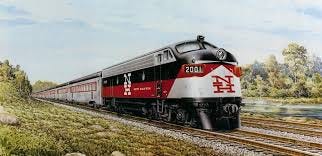
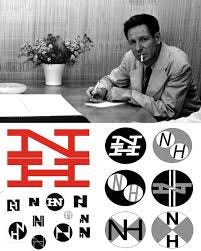
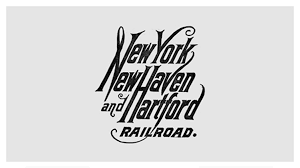
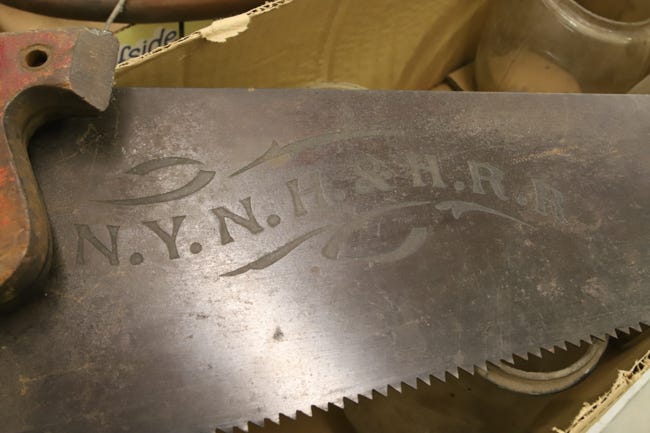
Somewhere in the history of the New York New Haven & Hartford R.R. likely somewhere between the J.P. morgan years and the Herbert Matter design era was a milestone commemorated with a hand saw like the one pictured above. My long career with hand tools always takes me down a portal in history and having hobnobbed with the high rollers and book writers at the auction houses, flea markets and estate sales for decades puts me firmly in the top percentile of vintage tool user/collector/dealers. A bloodhound for provenance and history.
Hand tools built America before and long after the advent of the machine age and commemorative tools were part of industry milestones, their importance highly regarded and acknowledgement of the trades they represent. We owe everything we are to tools.
That being said, the above rip saw is at this writing still at the auction house awaiting shipment; I put in a clandestine off-site bid to demoralize the competition, who still put some knowledgeable whoop-ass on me from afar; none the less it is secured.
Meanwhile, with my head deep into background research, that saw is being a bit elusive, inconceivable, (I do not think that means what I think it means) since failure is not an option.
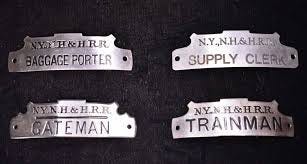
Here’s what is known so far: the saw was made by one of the top three makers of the period, Disston, Atkins and Simmons (Keene Cutter, Winchester and others). N.Y.N.H.&H.R.R. contracted with Atkins to make saws for its rail and transport enterprise etched with the block lettered logo denoting property thereof. The saw pictured is clearly a commemorative with design graphics that sets it apart likely as a promotional piece marking a milestone in company history. What that milestone is, is the mystery.
Even as a commemorative it’s certainly not the only one of its kind in existence, though it might be a limited edition. In 35 years of active engagement, it’s the only one I’ve seen, and so far, no other examples have been found by me. Rarity and condition determine value in the antiquity’s world, so tracking down the prevenance is critical. I took a calculated gamble on the saw and looking to add value because that helps support my tool habit.
Desperate, I’m now resorting to deciphering the design motif hoping to determine its time period and nail down its purpose.
To my untrained eye, here’s what I see: elements of Victorian design in the form of characterized acantha sprigs, along with elements of art-deco and mid-century design, even streamline design represented by shiny steel and flowing movement all framing a standard block logo riding on a wave; a consolidated design.
I really have no idea; expertise is a fickle partner and easily deceived. Just when we think something unusual turns up, it becomes a maelstrom of examples emerging from nowhere, dashing hopes and crushing confidence, our calculated risks turning into poor investment. Comes with the territory.
Maybe it denotes an event during the J.P. Morgan period and his bid to dominate the entire transportation network of New England including over land sea and air, or the consolidation of rail networks or steam, diesel and electric power consolidation.
Maybe Herbert Matter, the master himself had a hand in its design, which would be to my good fortune.
Here’s the thing
It’s not a priceless artifact, but a slice of Americana and industrial prowess; its value greater than monetary gain. A trip down the rabbit hole. So, we’ll see.
Meanwhile, nothing wrong with deferring to the experts: Leading train travel into the space age - by Richard Baird
Richard Baird | Substack
